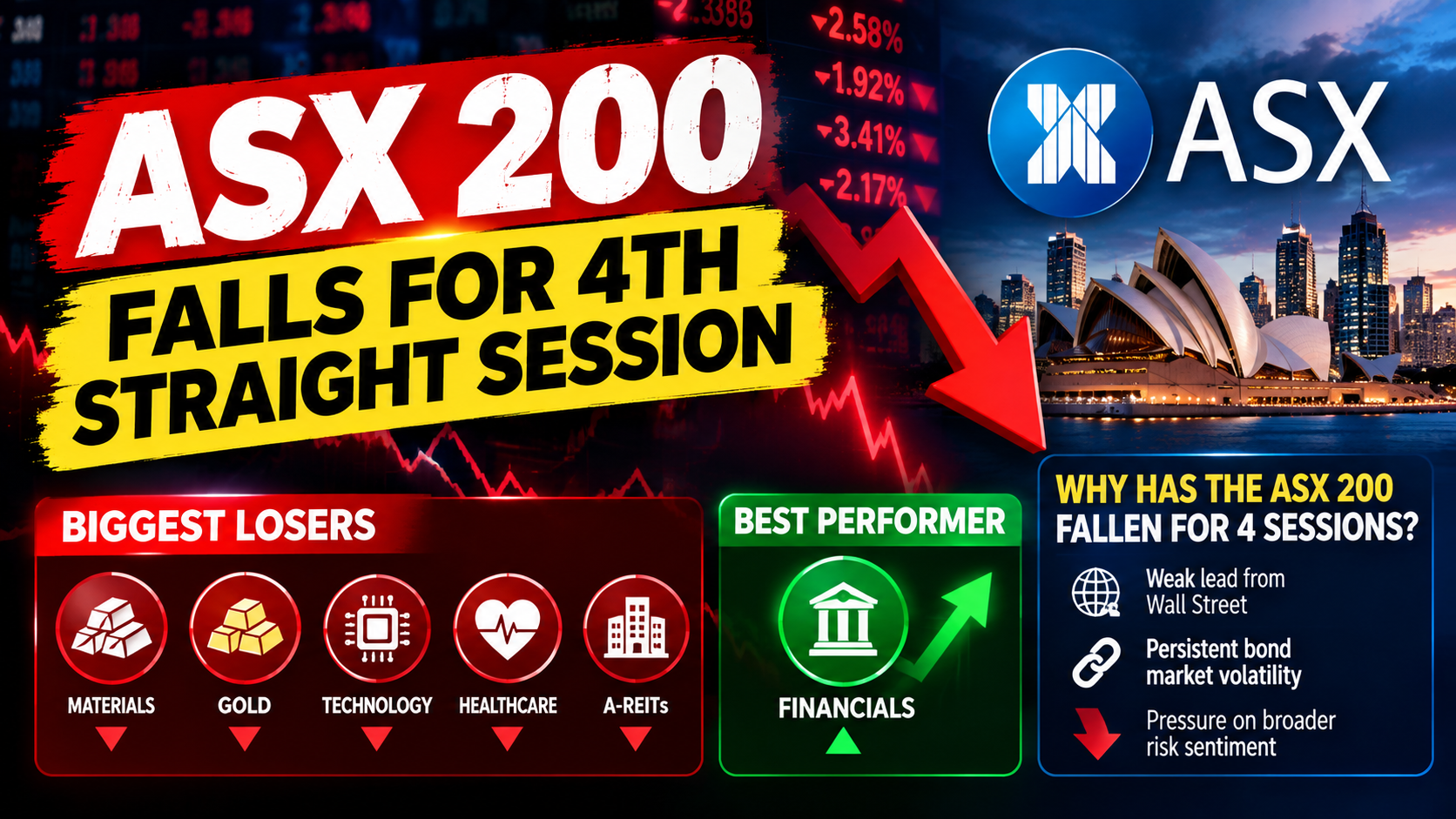
More than 250 ASX-listed companies are releasing FY26 results across the five weeks from 3 to 31 August, and the tone of the season is set by a split economy. Resources delivered their best year since 2006, while industrials broadly declined in FY26 — a divergence some brokers are calling a "multi-speed" market. The ASX 200's FY26 total return of around 6.1% sits well below its ~9.6% long-term average, and that undershoot is largely why this reporting season is being watched so closely: the market needs confirmation that FY27 brings a genuine recovery in industrial earnings, not just another year of resources doing the heavy lifting.
Three forces are shaping how individual results land:
Higher-for-longer rates. The Reserve Bank of Australia has already increased interest rates a times since February and they say there are more increases coming which is putting a lot of pressure on peoples budgets at home. This is also making people wonder about the problems that people who have mortgages might have with paying them and if the big banks will be okay. The Reserve Bank of Australia is still talking about making changes, to interest rates.
Structural rotation into yield. Changes to Capital Gains Tax settings are making investors choose dividend payers, over growth names. This means people are looking closely at the dividend guidance and franking levels of Capital Gains Tax. Investors like to know what they can expect from Capital Gains Tax so they are paying attention to the dividend guidance and franking levels of Capital Gains Tax.
A high bar after February. February had good results, the best in a long time. There were good surprises than bad ones about one and a half good surprises for every bad one. This means that August has a lot to live up to. If the results in August are just average the stock might still go down a lot if the company does not give information about Februarys margins or cash flow. The results, in August have to be good not average or people might sell their stock and that would make the price go down.
Week-by-Week: Where the Big Moves Cluster
In the beginning of August a few companies started to make some moves. These companies were AMP, ResMed, Block, Atlassian and Nick Scali. They of set the stage for what was going to happen next. Some insurance and retail companies also reported their numbers early which gave us an idea of what to expect from the others. Companies, like AMP, ResMed, Block, Atlassian and Nick Scali were the ones to watch
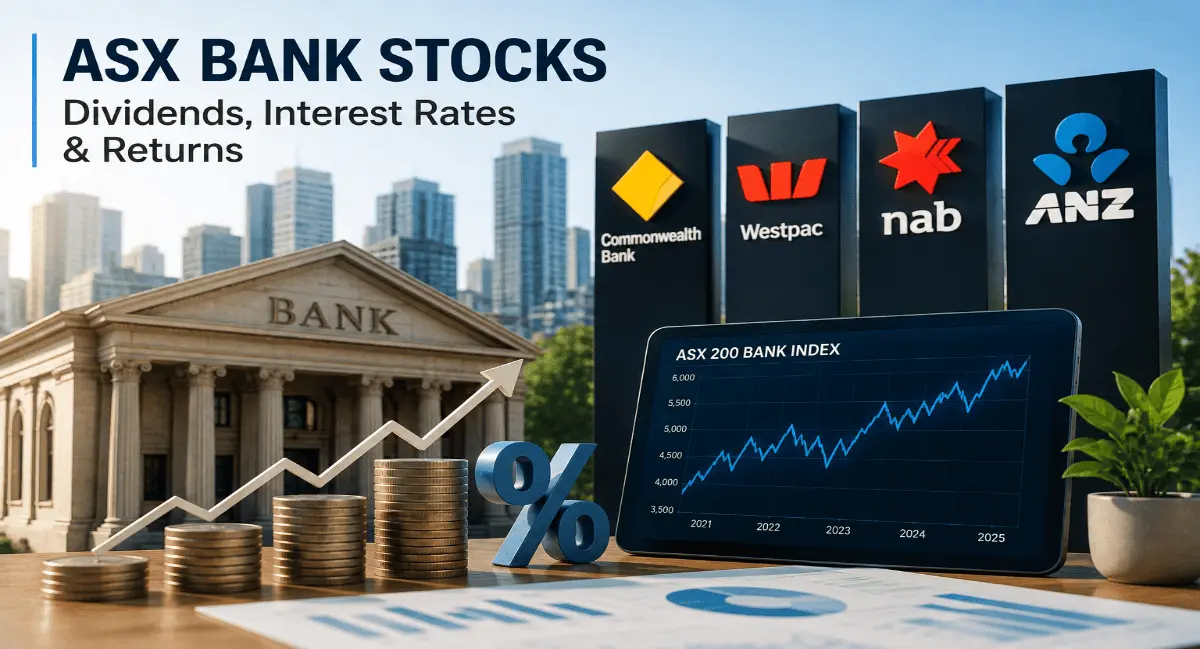
Week two (11–14 August)The market is controlled by the banks. The Commonwealth Bank of Australia reports its year 2026 result and declares a final dividend on 12 August. This is probably the important result of the season. The reason is that the Commonwealth Bank of Australia is like a sign of what's happening with credit for households and businesses.
Other companies, like Westpac, Suncorp, Telstra, Origin Energy, AGL, Transurban and SEEK all report their results around the time. This means that peoples understanding of the economy can change a lot in just one week. The Commonwealth Bank of Australia result is very important because it helps people understand what is happening with the economy.
Week three (17–21 August) BHP and CSL are going to report their results close to each other. These two stocks are like two sides of the stock market. BHP is a mining company and CSL is a big healthcare company. BHP is going to tell us how it did in the year under its new leader. The companys stock price went up by 62 percent in the year. Now people who invest in BHP want to know if it can keep doing. They are especially interested in how copper the company thinks it will produce in the next year.
The company has a mine called Escondida and it is not getting as much good ore from it as it used to.
CSL is a story. It has already said that it is going to take a hit of about US$5 billion because some of its investments are not worth as much as it thought. When CSL tells us how it did the important thing will not be the number it gives us but what is, behind that number. We want to know the details. BHP and CSL are important because they show us what is going on in the stock market.
The back half of August is the busiest single stretch, packing in BlueScope, JB Hi-Fi, Cochlear, Lendlease, James Hardie, Breville, Pro Medicus, Coles, Stockland, Goodman Group, several gold and lithium miners, and more — a genuine cross-section of the index reporting inside days of each other.
Stock-Specific Flashpoints
Commonwealth Bank (CBA) — People think that the Commonwealth Bank of Australia will make a profit of $10.85 billion in cash, which is more than the $10.25 billion they made before. They also think that the dividend for the year will be around $5.05, which is up from $4.85.
The Commonwealth Bank of Australia has not done well as the market this year. The market has been going up slowly not really booming. Because the Commonwealth Bank of Australia stock is valued highly it is very sensitive to any problems with the difference between what they pay for money and what they charge for money or if people start having trouble paying back loans or if they do not give back as much money to shareholders as they said they would.
The Commonwealth Bank of Australia is the bank and it is like a sign of how the whole economy is doing. So when they release their results it usually sets the tone for how people will feel about the market, for the few days.
BHP — After a 62% FY26 rally, the bar is high. The market will be watching FY27 copper guidance (1,650–1,800 kilotonnes, down from 1,953kt in FY26) and early commentary from the new CEO more closely than the headline profit line.
CSL — Guided to roughly US$15.2 billion in FY26 revenue and ~US$3.1 billion in NPATA, but the flagged US$5 billion impairment charge means the market's reaction will hinge on how cleanly the underlying business result is separated from one-off writedowns.
Telstra, Origin Energy, Suncorp — All report in the same mid-August window as the banks; consensus NPAT sits near $2.33 billion for Telstra and $1.18 billion for Origin, with Suncorp's insurance margins offering a read on claims inflation.
The Big Four banks broadly — CBA and Westpac are considered to be the most at risk if property prices drop further. This is because a large part of their business 45 to 50 percent comes from home loans. Because of this the way they talk about the quality of their loans is more important, than this time around.
Why Dividend Guidance Matters More This Year
Changes to Capital Gains Tax are making people look at portfolios in a way focusing on yield. This means people are paying a lot of attention to ratios and franking levels.
Most companies on the index pay out around 60 to 80 percent of their Net Profit After Tax. However this can vary a lot depending on how strong the companys balance sheet's what they need to spend on capital expenditures and how much cash they are generating. So just because a company makes a lot of profit it does not mean they will pay out a dividend.. On the other hand a company that does not make a lot of profit might still pay out a big dividend.
Companies that have a lot of money coming in from their operations and do not have to spend a lot on capital expenditures have freedom to keep paying dividends or even increase them.. Companies that are facing higher financing costs or are under pressure to keep their prices low are more likely to cut their dividends, which could surprise the market. Companies with operating cash flow and low capital expenditures can sustain or lift payouts while companies with rising financing costs or margin pressure are, at risk of a dividend cut.
Historical Backdrop
Seasonally, August is one of the better months for the ASX 200 — since 1980 the index has averaged a 0.71% gain and finished higher 61% of the time, with the total-return figures even stronger since 2001. But that average masks the stock-specific violence that reporting season produces: February 2026 saw CBA rally 6.8% and then another 5.4% the next day on its result, BHP jump 4.7% to fresh all-time highs on a dividend beat, and Woolworths surge 12.9% — its largest single-day gain on record — on a strong trading update. Index-level calm and single-stock chaos can coexist, which is exactly the dynamic investors should be positioned for through the rest of August.
This reporting season is not about if the ASX 200 goes up or down. It is about which individual companies get a change in their price. The market is checking if industrial companies can do what they say they will do for the year 2027. The market is also checking if the banks can handle pressure on interest rates without it affecting the quality of the loans they give.. The market is checking if the companies can still pay the dividends they said they would.
The companies that are most likely to have an impact are the Commonwealth Bank, BHP and CSL. They are all reporting their results around the time. The Commonwealth Bank reports on 12 August and BHP and CSL report, on 17 and 18 August. These are important to watch even if you do not own these stocks because they will set the tone for the rest of the reporting season.
( Source Market Analysis )