What Is the Energy Sector
The ASX labels "Energy" as a single, neat category. In reality, that tidiness is misleading. A company drilling for gas, off the Western Australian coast and a company bolting together grid-scale batteries in regional Victoria both get filed under the same heading, and on most days they have almost nothing to do with each other.
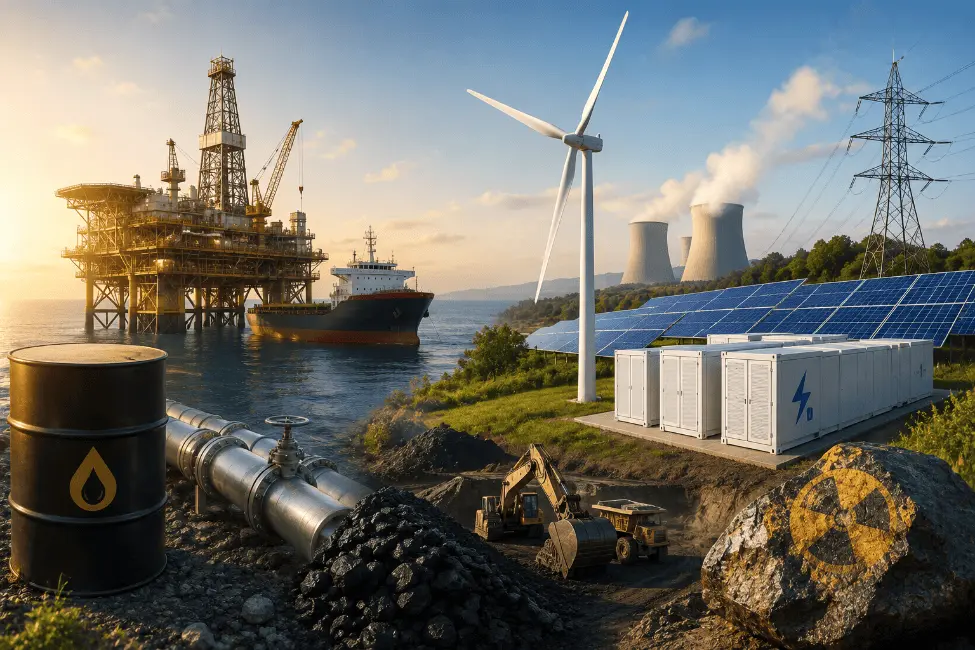
So what actually ties them together? The Essential demand. Energy consumption doesn't stop when the broader economy cools down. Factories require power to function properly and homes need heat in winter to survive. That's why the energy sector as a whole carries a defensive reputation, even though plenty of the stocks inside it are anything but defensive on a week-to-week basis. Broadly, ASX energy covers oil and gas producers, coal miners, electricity generators and retailers, uranium companies, and a fast-growing list of renewable and storage businesses. The ASX energy landscape breaks down into four distinct camps.
Oil and gas
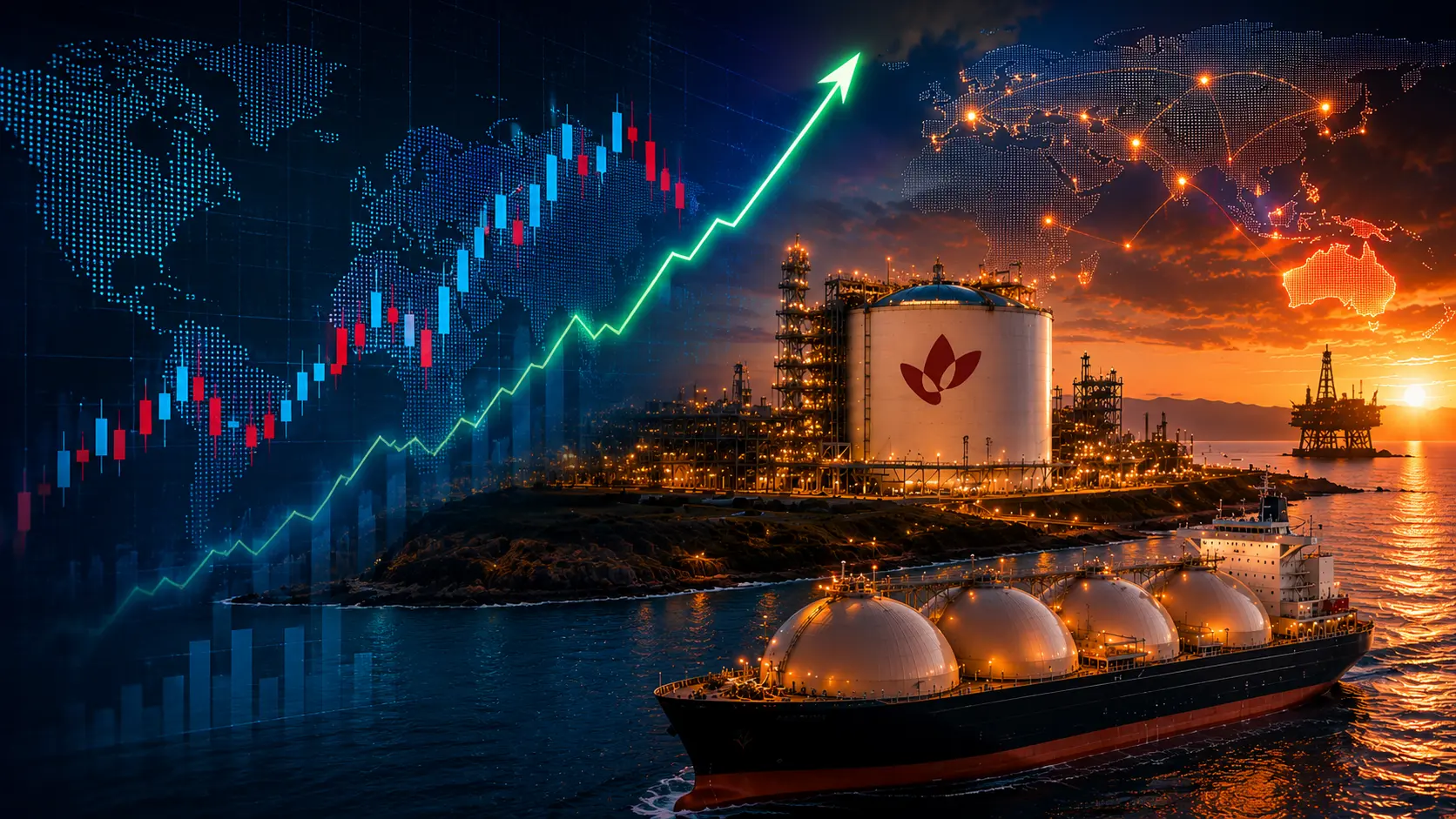
Starts with the names most people already half-know. Woodside Energy and Santos anchor the large-cap end of ASX oil and gas, both running LNG operations that scale up liquefied natural gas, which is then cooled and shipped mostly to buyers in Asia, in addition to their domestic oil and gas production. Beach Energy and Karoon Energy sit lower down the market-cap table since they operate on tighter production bases, meaning crude price movements hit their earnings with far greater intensity.
These are global businesses selling into a global commodity, which is why their share prices track Brent crude and West Texas Intermediate more closely than they track anything happening in Canberra. Brent has swung between roughly US$59 and US$121 a barrel this year and was sitting in the low-to-mid US$80s through early August. Most of that swing traces back to one place: the Strait of Hormuz, the narrow shipping lane between Iran and Oman through which a huge share of the world's seaborne oil passes. Any sign of tension can move Brent prices within the hour. Woodside and Santos have closely tracked these swings, rallying hard when supply fears flare up and dropping back as geopolitical negotiations progress.
Why do income investors put up with that? Due to Cash Flow. LNG contracts are typically long-dated, and strong free cash flow has historically funded reliable dividends. The problem here is structural. These projects are expensive, as they carry substantial cost and long build time involved, significant operational risks, and a growing pool of institutional capital now avoids fossil fuel exposure on principle. That last point puts a ceiling on how much valuation premium the sector can ever really earn, no matter how good this year's cash flow looks.
Coal deserves a line here too, even if it rarely gets top billing. Whitehaven Coal is the main play on the ASX, and domestically, it’s a story of managed decline as renewables and storage push coal-fired power off the grid on a fixed timeline. Export markets are a completely different game. Offshore demand, especially for the metallurgical coal required in steel production, keeps producers commercially viable long after local power plants close down.
Renewables
There's one number doing most of the work in this half of the sector: 82%. That's the federal target for renewable supply to the National Electricity Market by 2030, and it's why billions of dollars are currently flowing into solar, wind, batteries and transmission infrastructure. It's also why Origin Energy and AGL Energy, Australia's two big integrated utilities, are simultaneously retiring coal assets and building renewable capacity of their own.
Worth being precise about Origin and AGL: neither is a pure renewable player. Both generate and retail electricity, and both are running a mixed fossil-and-renewable book for as long as the transition takes place. Infratil is a different kind of exposure again, a diversified infrastructure investor where renewables sit alongside digital infrastructure and other assets, which tends to smooth out the ride compared with a single-technology developer.
The economics work differently here too. Renewable generators mostly sell power through long-dated offtake contracts rather than into a spot market, so earnings tend to be steadier but more exposed to policy decisions than to commodity swings. Growth is structural and tied to government targets and how fast infrastructure actually gets built rather than cyclical. The catch is that a lot of pure-play developers are capital-hungry. Building a wind farm or a battery project costs real money up front, and repeated equity raises to fund the pipeline can dilute existing shareholders even while the underlying business is genuinely growing.
Where the two camps actually meet
It's easy to think of oil and gas and renewables as opposites, and as long-term investment theses, fair enough, they largely are. But gas does one specific job inside the renewable transition that is not talked about much, which is: firming. Solar and wind don't generate when the sun's down, or the wind's not blowing, so the grid needs something that can ramp up fast to cover the gap until batteries are built out enough to do that job themselves. Gas is currently the main tool for that. It's a big part of why gas demand is not collapsing even as renewables take a bigger share of the grid every year. Watch battery storage additions, not any single quarter's headlines, if you want to know how quickly that reliance fades.
Uranium
A smaller camp with growing attention is uranium, led on the ASX by Paladin Energy. It fuels nuclear power, which has been getting a second look globally as a zero-emission source of baseload power generation. Yes, the steady, round-the-clock power that intermittent renewables can't provide by themselves. With no domestic nuclear industry in Australia, the ASX uranium names are essentially exporters, selling into a global market where interest in new nuclear capacity has been building for a few years now.
A few things worth knowing before you look at any individual stock
Energy and mining get bundled together in market commentary because both are commodity-sensitive, but the drivers underneath are opposite. Iron ore and copper move with industrial production and infrastructure spending. Oil and gas move with transport demand, heating needs and geopolitics. The two can and do move on entirely different schedules, even sharing the "resources" label in every broker note.
The S&P/ASX 200 Energy index is a decent shorthand for how the sector is doing relative to the broader market, but it's a smaller weighting in the ASX 200 than materials or financials. A genuinely strong run in energy shares doesn't always move the headline ASX 200 number much even when a stock like Woodside is up double digits.
And the transition is the thing to actually track, not this quarter's oil price. Producers are hedging their own long-term position already. Woodside's push into hydrogen is one example while Origin and AGL are effectively running two energy businesses inside one balance sheet, one shrinking and one growing at the same time. For anyone new to this, that dual identity is most of what "the ASX energy sector" actually means.
( Source : Market Analysis )