Starting out on the Australian share market can feel like a lot to take in. More than 2,000 companies are listed on the ASX, and it's easy to think you need to find the next big winner before you can begin. You don't.
For many beginners, a more practical starting point is a diversified fund or a well-established company you understand. The important part is to invest with a plan, keep your costs in check and give your investments time.
This article is general information, not personal financial advice. Do your own research and consider speaking with a licensed financial adviser before making investment decisions.
What should beginners look for in a stock?
A familiar company name isn't enough on its own. When you're researching a business, look at things like:
- A business model that has stood the test of time and a record of earning money.
- A strong position in its industry, with competitors unlikely to push it aside overnight.
- A history of paying dividends, if income is important to you. Some Australian companies pay franked dividends.
- Shares that are actively traded, so buying and selling is generally easier.
- A business you can explain in plain English. If you can't work out how it makes money, take time to learn more before investing.
For many beginners, an ETF is a simpler place to start
An exchange-traded fund, or ETF, bundles a group of investments into a single fund. Instead of relying on the fortunes of one company, you can own a small slice of many companies at once. That spread can help reduce the impact of any one business performing poorly, though it can't remove investment risk altogether.
Here are a few broad ETF categories and examples listed on the ASX:
- Australian shares: broad exposure to large ASX companies, such as VAS, A200 and STW.
- International shares: exposure to markets across the US, Europe and Asia, such as VGS and IWLD.
- US shares: funds tracking large American companies, such as IVV and NDQ.
- High-dividend shares: funds focused on companies that pay dividends, such as VHY and SYI.
ETFs appeal to many first-time investors because they offer diversification in one purchase and can have relatively low fees. You still need to check what a fund holds, what it costs and whether it suits your goals.
Well-known ASX companies to research
If you'd rather learn about individual businesses, the companies below are examples to investigate not recommendations to buy. They span several parts of the Australian market.
Banks and financials
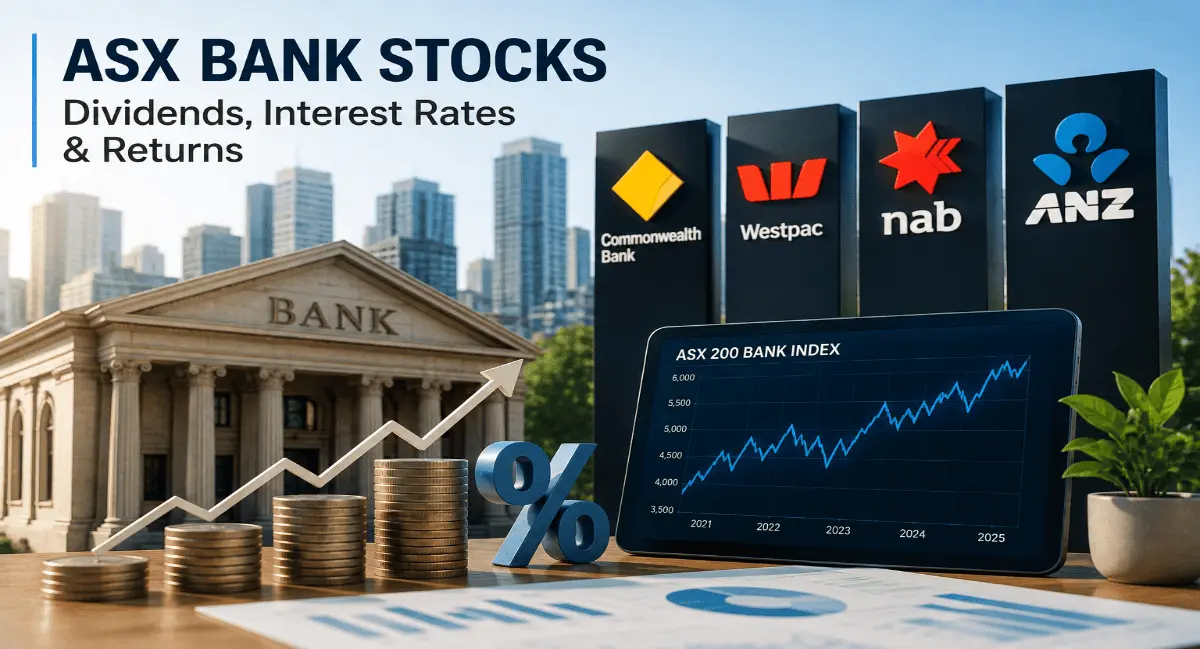
Commonwealth Bank (CBA) is Australia's largest bank by market value and is known for paying dividends. Macquarie Group (MQG) earns money through a range of global financial activities. Westpac (WBC), NAB (NAB) and ANZ (ANZ) are other major banks with histories of paying dividends.
Resources and mining
BHP Group (BHP) and Rio Tinto (RIO) are major global miners, with businesses that include iron ore and other resources. Fortescue (FMG) is another large iron ore producer. Mining companies can be affected by changing commodity prices, so their earnings and dividends may move around.
Healthcare
CSL (CSL) is a global biotechnology company focused on plasma therapies and vaccines. ResMed (RMD) makes devices for sleep apnoea, while Cochlear (COH) develops hearing implant technology.
Consumer and retail
Wesfarmers (WES) owns businesses including Bunnings, Kmart and Officeworks. Woolworths (WOW) and Coles (COL) operate in Australia's supermarket sector, where demand for everyday groceries can be relatively steady.
Infrastructure and telecommunications
Transurban (TCL) operates toll roads and has revenue linked in part to inflation. Telstra (TLS) is Australia's largest telecommunications company and is known for paying dividends.
A few basics worth understanding before you invest
Diversify. Putting all your money into one company—or even one industry can leave you exposed if that part of the market struggles. Australia's share market has a large weighting in banks and mining, so some investors also look for international exposure.
Understand franking credits. Many Australian companies pay dividends with franking credits, which reflect tax already paid by the company. Depending on your tax situation, these may reduce the tax you owe or affect your refund.
Think in years, not days. Share prices go up and down. A long-term plan can help you avoid reacting to every market swing, but there are no guaranteed returns and losses are possible.
Keep an eye on costs. Brokerage and fund management fees can eat into returns, particularly if you invest small amounts or trade often. Compare the fees and features of different platforms.
Consider investing regularly. Dollar-cost averaging means putting in a set amount at regular intervals. It can help spread out your purchases over time, although it doesn't guarantee a profit or protect you from losses.
How to get started
- Decide what you're investing for, whether that's retirement, a future home or another goal.
- Build an emergency fund first. A common guide is to keep three to six months of expenses accessible.
- Consider paying down high-interest debt. Credit-card interest can quickly outweigh the returns you might hope to earn from shares.
- Compare brokers. Look at brokerage, platform features, CHESS sponsorship and whether you want access to international markets.
- Open and verify your account. You'll generally need to prove your identity and may be asked for your tax file number.
- Start with an amount you can afford, then keep learning as you go.
- Review your investments from time to time—rather than feeling you need to check them every day.
Common mistakes to avoid
- Buying a share because of a hot tip on social media or a forum.
- Putting all your money into one company.
- Trading so often that fees pile up.
- Investing money you'll need in the next few years.
- Forgetting about fees, tax or diversification.
- Selling in a panic when the market falls.
( Source : Market Analysis )